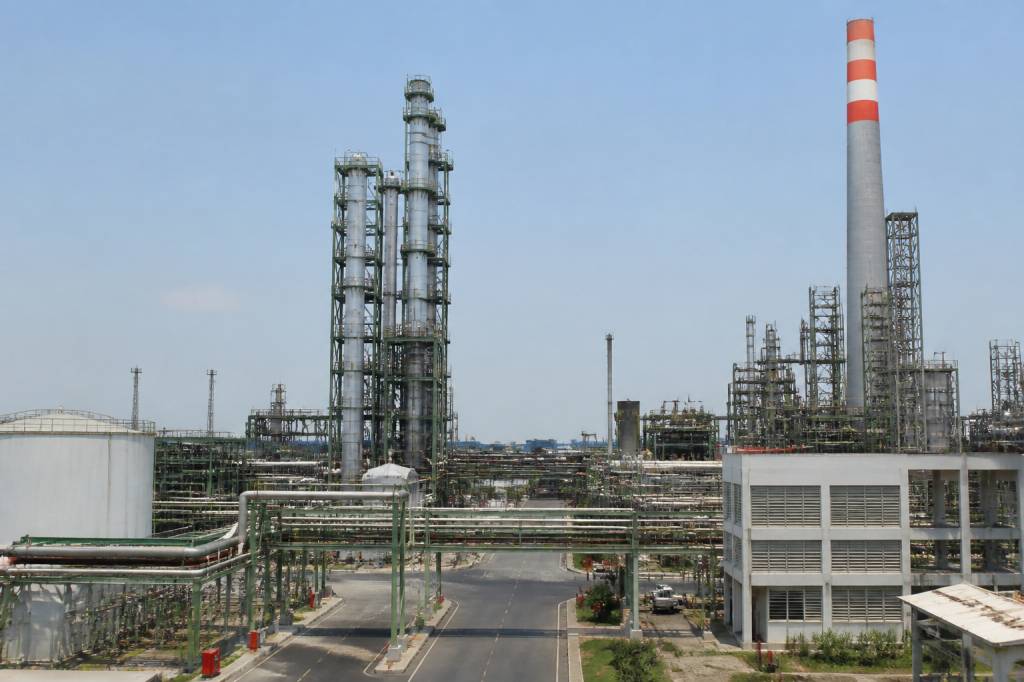
ASX:ILU refers to Iluka Resources, one of Australia’s leading mineral sands producers and an increasingly important participant in the rare earths supply chain. For investors, the stock sits at the intersection of several major themes: demand for titanium dioxide, zircon market cycles, Australian critical-minerals policy, China-related supply risks and the long-term development of the Eneabba rare earths project.
That combination gives Iluka a more complex investment profile than a conventional mining company. Its earnings remain exposed to mineral sands prices, while a significant part of the valuation story depends on capital investment and execution at Eneabba. The key question is therefore not simply whether mineral sands demand will recover. It is whether Iluka can convert its existing resource base and government-backed projects into stable, high-margin cash flow.
What Iluka Resources does
Iluka operates across the mineral sands industry, producing products such as zircon, rutile and synthetic rutile. These materials are used in ceramics, pigments, welding electrodes and other industrial applications.
Titanium dioxide feedstocks are particularly important. They are ultimately linked to the production of pigments used in paints, coatings, plastics and paper. Zircon, meanwhile, is widely used in ceramic tiles and sanitaryware because of its heat resistance and durability.
The company’s operations are concentrated in Australia and Sri Lanka, with a portfolio that includes mineral sands assets in Western Australia, South Australia and Victoria. Iluka also owns a substantial stake in Deterra Royalties, although investors should assess the contribution of that investment separately from the company’s mining operations.
Iluka’s strategic profile has changed significantly in recent years. The company is no longer viewed only as a mineral sands producer. Its Eneabba project has positioned it as a potential supplier of separated rare earths, including neodymium and praseodymium, which are used in permanent magnets for electric vehicles, wind turbines, industrial motors and other technologies.
Why ASX:ILU attracts investor attention
There are three main reasons investors continue to follow Iluka.
- Exposure to mineral sands: Iluka has an established operating base, long-life resources and experience in processing complex ore bodies.
- Rare earths optionality: The Eneabba project could create a new earnings stream in a market where governments are seeking alternatives to Chinese processing capacity.
- Strategic Australian assets: The company’s resources and processing infrastructure are located in a country with strong mining regulation, established export channels and growing critical-minerals ambitions.
The third point is increasingly relevant. Rare earth mining is only one part of the supply chain. Separation and refining are often more difficult, more capital-intensive and more concentrated geographically. Iluka’s planned Eneabba refinery aims to address that gap by processing monazite into separated rare earth oxides.
For investors, this creates potential value that is not fully captured by looking only at historical mineral sands earnings. It also introduces greater project risk. A processing plant is not a simple extension of an existing mine. Construction costs, commissioning, feedstock quality, recovery rates and customer contracts all matter.
Mineral sands market trends to monitor
The outlook for Iluka’s traditional business will depend heavily on global industrial activity. Mineral sands demand is closely linked to construction, housing, infrastructure and consumer spending. When property development slows, ceramic tile consumption usually weakens. When factories reduce production, demand for pigments and industrial materials can also soften.
China remains a major influence on the global market. Its property sector, manufacturing activity and export competitiveness can affect both demand and pricing. However, China is not the only factor. Construction activity in India, Southeast Asia, Europe and North America also shapes the market for zircon and titanium feedstocks.
Supply discipline is equally important. Mineral sands markets can tighten quickly because new projects often require extensive environmental approvals, infrastructure and rehabilitation planning. Existing producers may benefit when competitors reduce output or delay developments.
Investors should distinguish between volume growth and price growth. Iluka may sell a similar quantity of product while experiencing a meaningful change in revenue if prices move. Conversely, stronger prices may not translate directly into higher free cash flow if operating costs, sustaining capital or project expenditure rise at the same time.
The Eneabba rare earths project
Eneabba is the central element of the long-term ASX:ILU investment case. Iluka has access to monazite-rich mineral sands residues at Eneabba, a resource that can provide feedstock for rare earth processing.
The project has received support from the Australian government through a non-recourse loan facility. This support reflects the strategic importance of building domestic critical-minerals processing capacity. It also reduces, although it does not eliminate, the financing burden associated with the project.
The proposed refinery is designed to produce separated rare earth oxides rather than simply concentrate material for export. That distinction is important. Separation facilities can capture more value, but they also involve demanding chemical processes, specialised equipment and strict quality control.
The project’s potential advantages include:
- Access to a long-term monazite feedstock resource.
- Location in a stable mining jurisdiction.
- Potential government and customer support for non-Chinese supply chains.
- Exposure to magnet rare earths used in electric motors and renewable-energy equipment.
- Expansion potential if processing performance meets expectations.
The main challenge is execution. Large-scale processing projects frequently face cost inflation, delays and commissioning problems. Investors should follow updates on final investment decisions, construction progress, capital expenditure, financing arrangements, offtake agreements and expected production ramp-up.
In practical terms, the market will eventually want evidence rather than plans: tonnes processed, recovery rates, product quality, operating costs and customer acceptance. Until those figures are available, Eneabba remains a high-value strategic option rather than a fully proven earnings stream.
Rare earths: opportunity with a volatile price cycle
Rare earths are often presented as a straightforward growth market because of electric vehicles and renewable energy. The underlying demand story is real, but the investment reality is more complicated.
Prices for neodymium and praseodymium can be highly volatile. New supply, weaker-than-expected electric vehicle demand, inventory changes and Chinese export policy can all influence market conditions. A project that appears attractive at one price assumption may look much less compelling if prices decline during construction.
There is also a difference between strategic value and shareholder returns. Governments may support a project because it improves supply-chain resilience, even when commercial returns are not immediately superior to those of existing producers. Investors must therefore examine the project economics, not just the policy narrative.
Iluka’s advantage is that its rare earths strategy is linked to an existing mineral sands business and a known resource base. That may provide more flexibility than a greenfield project dependent entirely on a newly discovered deposit. Nevertheless, the refinery will need to demonstrate competitive costs and reliable production.
Key financial indicators for investors
When reviewing ASX:ILU, investors should focus on operating cash flow and capital allocation rather than headline revenue alone.
- Mineral sands sales volumes: These show whether demand and customer orders are improving.
- Average realised prices: Price movements can have a substantial effect on margins.
- Cash cost per unit: Cost inflation can erode profitability even when sales remain stable.
- Free cash flow: This indicates how much capital remains after operating expenses and sustaining investment.
- Capital expenditure: Eneabba spending should be tracked against approved budgets and project milestones.
- Balance-sheet strength: Debt levels and liquidity will influence the company’s ability to absorb delays or weaker commodity prices.
- Deterra Royalties contribution: The investment can provide diversification, but its valuation and distributions should not be confused with operating mining performance.
Investors should also study management guidance. In mining, guidance is not a guarantee, but repeated revisions can signal pressure in labour availability, equipment reliability, geology or customer demand.
Potential catalysts for the stock
Several events could improve sentiment around Iluka shares.
- Stronger zircon and titanium dioxide feedstock prices.
- Improved construction activity in China and other major markets.
- Progress on Eneabba construction and financing.
- Binding offtake agreements with magnet, automotive or industrial customers.
- Evidence that project costs remain within an acceptable range.
- Positive production results from commissioning and ramp-up.
- Further Australian or international support for critical-minerals supply chains.
Commodity equities often react before financial results change. A credible project milestone can lift the share price because investors begin to assign a higher probability to future cash flow. The opposite is also true: a delay or cost increase can quickly reduce the market’s valuation of a development project.
Risks that could weigh on ASX:ILU
The most immediate risk is commodity pricing. Mineral sands markets can weaken if global construction remains subdued or if customers reduce inventories. Iluka may then face lower prices, reduced utilisation or pressure to adjust production.
Project execution is another major risk. Eneabba requires significant capital and technical expertise. Cost escalation in engineering, construction, energy and labour could reduce returns. Commissioning may also take longer than expected.
Rare earth price volatility deserves particular attention. A sharp fall in neodymium-praseodymium prices could affect project economics, especially if it occurs before the refinery reaches commercial production.
Regulatory and environmental risks are also material. Mineral sands operations involve land disturbance, water management, rehabilitation and community engagement. Approvals can take time, while changes to environmental standards may affect schedules and costs.
Currency movements matter as well. Iluka reports in Australian dollars but participates in global commodity markets where pricing is often influenced by the US dollar. A stronger Australian dollar can affect competitiveness and reported earnings.
Finally, investors should consider opportunity cost. A stock with an attractive long-term story may still underperform if capital is tied up during a lengthy development phase while other mining or industrial companies generate stronger immediate cash flow.
Three possible outlook scenarios
In a positive scenario, mineral sands prices recover, operating performance remains stable and Eneabba progresses without major cost overruns. Government support and long-term customer agreements could strengthen the project’s economics. Under these conditions, Iluka would combine a resilient base business with a credible rare earths growth platform.
In a neutral scenario, the mineral sands division remains profitable but operates in a mixed pricing environment. Eneabba advances broadly to schedule, yet the market waits for production evidence before assigning a higher valuation. The stock could trade mainly on commodity prices and project news.
In a negative scenario, weak construction demand reduces mineral sands prices while Eneabba suffers delays or cost inflation. Lower operating cash flow could increase pressure on the balance sheet and force investors to reassess the project’s expected return.
These scenarios underline why valuation matters. A strong resource base does not automatically make a stock cheap, and a strategic project does not guarantee shareholder returns. Investors should compare the company’s market value with conservative estimates of operating cash flow, project expenditure and eventual production.
What investors should watch next
The most useful information will come from company reports, quarterly updates, government announcements and project studies. Investors should pay particular attention to changes in capital costs, construction schedules, expected production volumes and financing terms.
It is also worth tracking the wider indicators behind the business: Chinese property data, global ceramic production, pigment demand, electric vehicle sales, permanent-magnet manufacturing and rare earth price trends.
For a practical review, an investor could build a simple monitoring table with four columns: mineral sands prices, production and sales volumes, Eneabba milestones, and balance-sheet movements. This avoids becoming overly focused on daily share-price movements, which can be noisy in a relatively cyclical mining stock.
ASX:ILU offers a differentiated exposure to Australian mineral sands and the emerging rare earths processing industry. Its established operations provide an operating foundation, while Eneabba offers potentially significant long-term upside. The trade-off is clear: investors receive strategic optionality, but they must accept commodity cycles, project risk and substantial capital requirements.
The stock may suit investors prepared to follow industrial markets closely and hold through development phases. It is less suited to those seeking predictable short-term earnings or low volatility. Before taking a position, investors should review the latest company disclosures, assess project assumptions independently and consider how Iluka fits within a diversified portfolio. This article is for information only and does not constitute personal financial advice.