


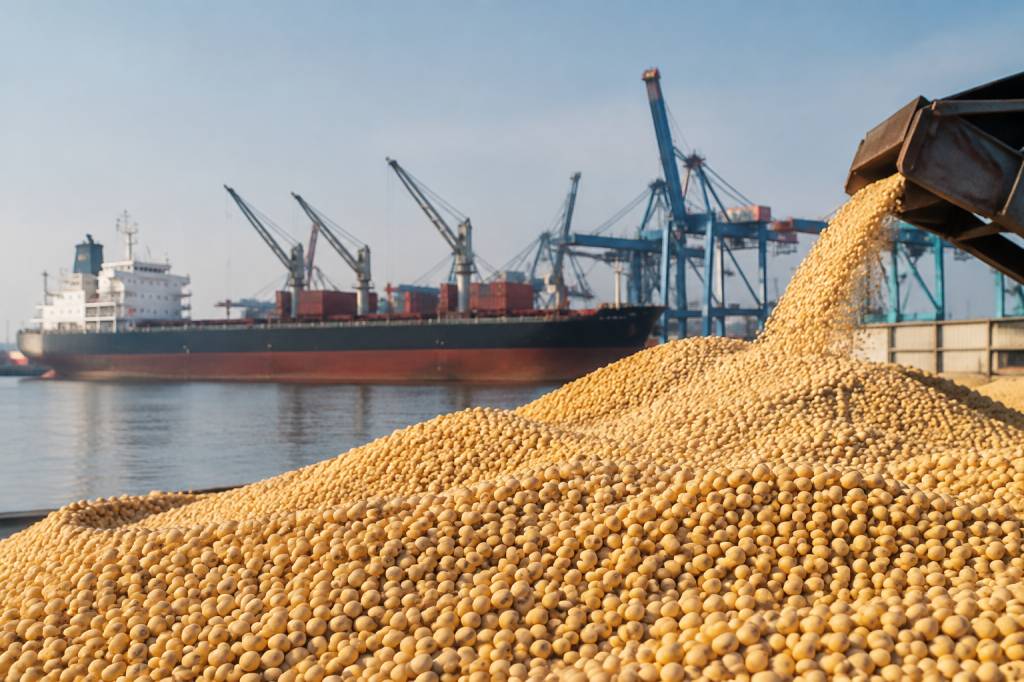
China’s soybean market has moved well beyond the boundaries of agriculture. It now sits at the intersection of global trade, animal nutrition, food security, logistics, biotechnology and industrial policy. As the world’s largest soybean importer, China influences planting decisions in Brazil and the United States, shipping flows across the Pacific, crushing margins in Asia and investment decisions throughout the agricultural supply chain.
The scale is considerable. China imports more than 100 million tonnes of soybeans in a typical year, while domestic production remains far below demand. Most imported beans are crushed into soybean meal for animal feed and soybean oil for food and industrial use. This structural imbalance makes China a critical destination for exporters and a central variable in global agricultural markets.
But the market is changing. Slower population growth, adjustments in the pig sector, tighter margins for crushers and efforts to improve domestic food security are reshaping demand. At the same time, innovation is entering every stage of the value chain, from precision farming in producing countries to automated ports and traceability systems in China.
A market built on imports
China’s soybean demand is closely linked to its livestock industry. Soybean meal provides a concentrated source of protein for pigs, poultry and aquaculture. When the country expands its pork production, soybean crushing activity generally rises. When farmers reduce herds because of low margins or disease pressure, demand for feed ingredients can weaken.
This relationship was particularly visible during the African swine fever crisis that began affecting China’s pig population in 2018. The disease caused major losses and temporarily reduced demand for soybean meal. As the hog industry rebuilt, imports and crushing volumes recovered, although the structure of demand became more complex.
China’s feed manufacturers are now under pressure to control costs and reduce their reliance on expensive protein sources. They are testing lower-protein feed formulas, alternative raw materials and improved feed conversion ratios. This does not eliminate soybean demand, but it changes the quantity required for each kilogram of meat produced.
The country’s import dependence also reflects a basic geographical reality. China has limited arable land and water resources compared with the scale of its livestock and food-processing industries. Domestic soybean production remains important for rural development and supply resilience, but it cannot fully replace imports in the foreseeable future.
Brazil strengthens its position
Brazil has become the leading supplier of soybeans to China, supported by expanding cultivation, competitive production costs and a harvest calendar that complements the North American season. Large Brazilian volumes arrive in China when inventories from the previous US crop are declining, giving Chinese crushers more flexibility in procurement.
The relationship has transformed Brazilian agriculture. Ports, railways, storage facilities and inland transport corridors have expanded to move soybeans from producing regions to export terminals. The northern arc of Brazilian logistics, including routes connected to ports in the Amazon region, has attracted investment because it can shorten the distance between farms and Asian markets.
However, Brazil’s competitive advantage is not automatic. Exporters must manage long inland distances, seasonal road constraints, river levels, port congestion and environmental scrutiny. A truck leaving Mato Grosso may travel thousands of kilometres before reaching a vessel. Every delay affects freight costs, delivery schedules and the final margin.
China’s buyers are also paying closer attention to traceability. Deforestation risks, land-use changes and compliance with sustainability standards are increasingly part of commercial discussions. The question is no longer simply whether Brazil can supply enough beans. It is whether suppliers can document where those beans were grown and under what conditions.
The United States remains strategically important
The United States continues to play a major role in the Chinese soybean market, even as competition from Brazil has intensified. US exporters benefit from highly developed agricultural infrastructure, sophisticated grading systems and efficient river-to-port logistics. The Gulf export corridor remains one of the world’s most important agricultural shipping routes.
Trade relations between Washington and Beijing, however, have made the market more volatile. Tariffs, diplomatic tensions and changes in purchasing patterns can quickly redirect cargoes. When Chinese buyers reduce US purchases, American exporters often look for alternative destinations, while China increases procurement from Brazil, Argentina or other suppliers.
These shifts create operational challenges for farmers, traders and shipping companies. A purchasing decision made in Beijing can influence basis levels in Iowa, vessel bookings in the Gulf of Mexico and storage demand in South America. The soybean market demonstrates how closely agricultural supply chains are now connected to geopolitics.
For China, maintaining access to multiple origins is a form of risk management. For exporters, the Chinese market remains too large to ignore. This mutual dependence does not remove political friction, but it places a practical limit on how far commercial ties can be disrupted.
Argentina adds processing capacity to the equation
Argentina occupies a different position in the global soybean system. It is a major producer, but its importance comes largely from its crushing industry and exports of processed products such as soybean meal and oil. This gives Argentina a more industrial profile than countries focused primarily on exporting raw beans.
China’s demand for soybean meal has traditionally supported imports of whole beans for domestic crushing. Yet the global market is not static. Freight rates, processing margins, domestic environmental rules and the availability of feed ingredients can alter the balance between importing beans and importing meal.
For Chinese companies, the location of crushing capacity is a strategic decision. Processing close to feed mills and livestock clusters can reduce transport costs and improve supply responsiveness. At the same time, port-based plants benefit from direct access to imported raw materials. The result is a network in which coastal crushing facilities remain essential, while inland logistics determine how efficiently products reach farms.
Demand is becoming more efficient
One of the most important trends in China is the search for efficiency in feed production. Feed manufacturers are using enzymes, amino acids, formulation software and improved animal genetics to reduce waste. Precision nutrition allows producers to provide animals with a more targeted combination of nutrients instead of relying on broad safety margins.
This trend has direct consequences for soybean demand. If a pig farmer can obtain the same growth rate with less feed, the quantity of soybean meal required per animal may decline. Multiplied across millions of animals, small efficiency gains can influence national import volumes.
Yet efficiency does not necessarily mean a shrinking market. China’s meat and aquaculture industries remain large, and consumption patterns continue to evolve. Poultry and fish production may offset part of a decline in pork demand. Food manufacturers are also developing new applications for soybean protein, including plant-based foods, beverages and specialized nutrition products.
The market is therefore moving from a simple volume race toward a more sophisticated question: how much protein can be produced from each tonne of soybean meal? In this environment, feed technology becomes as important as crop acreage.
Domestic production and food security
Beijing has been encouraging greater domestic soybean production as part of a broader food-security strategy. Policies have included support for farmers, incentives to expand cultivation in suitable regions and efforts to improve yields through better seeds and agronomic practices.
China’s domestic soybeans are often used differently from imported beans. They can supply food products such as tofu, soy milk and traditional ingredients, where identity, quality and non-genetically modified status may be valued by consumers. Imported beans, by contrast, are largely directed toward industrial crushing and feed production.
Expanding domestic production faces clear constraints. Soybeans compete with maize and other crops for land. Water availability varies significantly between regions, and farm sizes remain smaller than in many large exporting countries. Productivity improvements will therefore depend on better varieties, mechanization, irrigation management and farmer access to technical services.
Domestic output is unlikely to eliminate import dependence, but it can provide a buffer. In strategic terms, even a modest increase in local supply may reduce exposure to international price shocks and transport disruptions.
Technology is reshaping the supply chain
Innovation is not limited to farms. China’s soybean supply chain is adopting digital tools that improve visibility from port arrival to feed mill delivery. Automated unloading systems, warehouse management software, electronic documentation and real-time inventory monitoring are becoming increasingly common.
At major ports, digital platforms help coordinate vessels, storage facilities, inspection services, rail connections and trucking capacity. This matters because congestion can be costly. A delay of several days may affect crushing schedules, vessel demurrage and feed availability for livestock producers.
Blockchain and other traceability technologies are also being tested to document origin, quality and sustainability claims. Their commercial value depends on data quality. A digital platform cannot compensate for incomplete farm records or inconsistent verification. Still, better data can make it easier for buyers to separate compliant supply from higher-risk cargoes.
Artificial intelligence is entering procurement and risk management as well. Traders can combine weather forecasts, satellite imagery, export data, freight rates and currency movements to improve purchasing decisions. These tools do not remove uncertainty—agriculture remains exposed to droughts, floods and political decisions—but they can shorten reaction times.
Climate pressure raises the stakes
Soybean production is increasingly exposed to climate volatility. Drought in Brazil, excessive rainfall in Argentina or heat stress in the United States can reduce yields and disrupt export schedules. For Chinese buyers, the effect is immediate: tighter supply raises prices and increases competition between feed manufacturers.
Climate risk is also changing corporate purchasing policies. Large food and feed companies are being asked to demonstrate progress on emissions, land use and deforestation. This is particularly relevant for soybeans because land conversion in producing regions remains a sensitive issue.
Several responses are developing across the industry:
- Satellite monitoring to identify land-use changes and map production areas.
- Digital records linking farms, cooperatives, traders and processors.
- Breeding programs focused on drought tolerance and higher yields.
- Regenerative practices designed to improve soil health and reduce input use.
- More efficient transport routes that lower fuel consumption and logistics emissions.
These initiatives are still uneven, and implementation costs can be high for smaller producers. Nevertheless, sustainability is moving from a communications topic to a procurement requirement.
Logistics remains the decisive advantage
In a commodity market, the lowest production cost does not always win. The decisive factor may be the ability to deliver a consistent volume at the right time and at a competitive landed cost.
China’s soybean logistics network is therefore critical. Imported beans arrive through major coastal ports, where they are inspected, stored and directed to crushing plants. From there, soybean meal and oil move toward feed mills, food manufacturers and distributors. Bottlenecks at any point can affect the entire chain.
Railways, barges and coastal shipping are increasingly important for reducing dependence on long-distance trucking. Intermodal transport can improve reliability, especially when roads are affected by weather or when fuel costs rise. For trading companies, logistics planning is no longer a back-office function. It is a source of commercial advantage.
A useful example is the interaction between port capacity and feed demand. If a vessel is delayed, a crusher may need to draw on local inventories or purchase from another supplier. That emergency decision can be more expensive than the original cargo. Inventory management, once treated as a cost, becomes a form of insurance.
What companies should monitor
Businesses exposed to the China soybean market should follow several indicators rather than relying on import volumes alone. The most useful signals include:
- Chinese hog inventories, slaughter margins and feed production.
- Crushing margins and operating rates at major processing facilities.
- Brazilian harvest progress, export line-ups and inland freight costs.
- US planting conditions, crop forecasts and trade policy developments.
- Weather patterns affecting South American and North American production.
- Changes in feed formulation and the use of alternative proteins.
- Traceability requirements linked to deforestation and sustainability.
Companies should also test several procurement scenarios. What happens if Brazilian exports are delayed? How would a change in tariffs affect the origin mix? Can the supply chain operate with lower inventories? These are practical questions, not theoretical exercises.
A market that will remain globally influential
China’s soybean market is entering a more complex phase. Import demand will remain substantial, but growth will depend on livestock cycles, feed efficiency, consumer preferences and economic conditions. At the same time, suppliers will face greater expectations around reliability, traceability and environmental performance.
The global trade map will continue to evolve. Brazil is likely to remain a dominant supplier, the United States will retain strategic importance, and Argentina will continue to influence processed soybean markets. New technologies will improve data, logistics and productivity, but they will not remove the fundamental risks created by climate, geopolitics and volatile prices.
For companies across agriculture, logistics and food processing, the lesson is straightforward: the soybean trade is no longer only about moving a crop from field to port. It is about managing information, infrastructure, risk and industrial transformation across continents. China remains at the centre of that system—and every major shift in its market is likely to be felt far beyond its borders.