


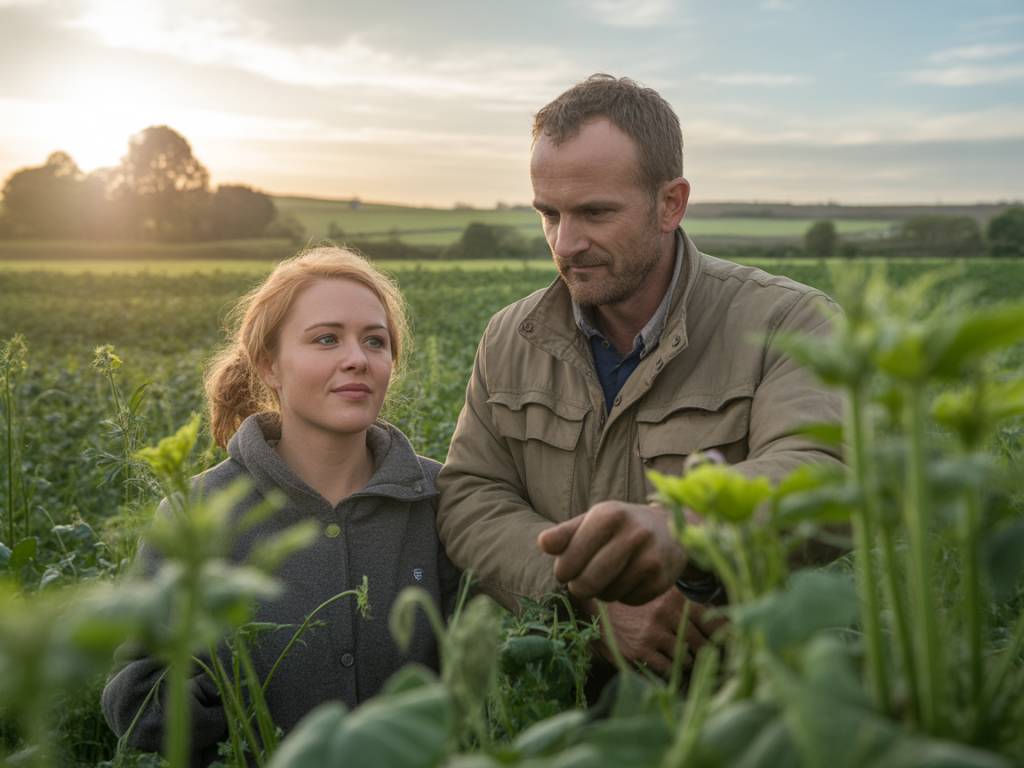
Why regenerative agriculture is moving from niche to necessity
Across the UK, regenerative agriculture has moved from the margins of experimental farming into the strategic heart of food and manufacturing supply chains. What started as a soil-health conversation is now a boardroom agenda item for retailers, food brands, and even manufacturers in sectors like textiles and packaging.
This shift is driven by three converging pressures:
- Climate and biodiversity risks: UK supply chains are already exposed to volatile yields, soil degradation, and water stress.
- Investor and regulatory expectations: ESG reporting, Scope 3 emissions and nature-related risk disclosures are forcing companies to look beyond their factory gates.
- Consumer demand: Shoppers are becoming more attentive to sourcing, animal welfare, and environmental impact—not just of food, but of everyday goods.
Regenerative agriculture sits at the intersection of these pressures. It promises not just “less bad” farming, but actively improved soil health, carbon sequestration, water retention, and biodiversity—all of which translate into more resilient supply chains. The real disruption, however, lies in the partnerships that are emerging to make regeneration investable, scalable, and measurable.
What regenerative agriculture looks like on UK farms
There is no single official definition of regenerative agriculture, but in practice UK projects typically revolve around a set of core principles and field-level practices.
Common regenerative practices include:
- Reduced or no-till cultivation: Minimising soil disturbance to protect soil structure, biology, and organic matter.
- Cover cropping: Keeping living roots in the ground year-round to reduce erosion, improve water infiltration, and feed soil microbes.
- Diverse crop rotations: Breaking pest and disease cycles while building soil fertility naturally.
- Integrated livestock: Using managed grazing to recycle nutrients, stimulate plant growth, and close nutrient loops.
- Precision inputs: Using data, sensors, and variable-rate technologies to reduce synthetic fertiliser and pesticide use.
On their own, these practices are not new. What is new is the way large buyers—supermarkets, brands, processors and even non-food manufacturers—are partnering directly with farmers to co-finance and de-risk the transition.
From transactional buying to long-term partnerships
Traditional food and manufacturing supply chains are highly transactional: buyers specify quality and volume, suppliers deliver, and price arbitrage governs the relationship. Regenerative agriculture demands something different—longer time horizons, shared risk, and upfront investment in land and know-how.
Across the UK, this is leading to a new generation of partnerships with several shared characteristics:
- Multi-year contracts that give farmers confidence to invest in new equipment and systems.
- Co-funded transition finance where buyers help cover the costs of trials, soil testing, advisory support, and capital upgrades.
- Shared data platforms for tracking soil health, yields, biodiversity, and carbon over time.
- Joint innovation projects involving agronomists, technology providers, and sometimes academic partners.
For manufacturers, this model is less about squeezing suppliers and more about securing the long-term viability and quality of their feedstocks—from wheat and barley to oats, rapeseed, milk, wool, and even bio-based materials used in packaging and textiles.
The changing face of UK food supply chains
UK retailers and food brands were among the first to grasp the strategic potential of regenerative partnerships. Faced with climate risks and intense scrutiny, many are now shifting away from transactional sourcing toward programmes that actively steward landscapes.
Key dynamics reshaping food supply chains include:
- Landscape-scale programmes: Instead of isolated pilot farms, buyers are co-designing interventions across entire catchments or regions to improve soil and water outcomes.
- Farm-level co-creation: Rather than imposing top-down standards, companies are working with farmers to adapt regenerative practices to local soils, crops, and markets.
- Embedded agronomy support: Some retailers fund independent agronomists or partner with NGOs to provide on-farm technical advice.
- New quality metrics: Beyond yield and appearance, parameters like protein content, nutrient density, and storage stability are gaining importance.
This shift is already visible in UK supermarket aisles, where claims such as “grown with regenerative farming practices” are beginning to appear on packaging. Behind those labels lies a complex web of contracts, data flows, and field trials connecting growers, processors, logistics providers, and brand owners.
Implications for manufacturing beyond food
Regenerative agriculture is not just a food story. Any UK manufacturer reliant on land-based raw materials has a stake in the health of the landscapes that supply them. This includes sectors such as:
- Textiles: Wool and plant-based fibres (such as flax or hemp) are increasingly promoted as lower-impact alternatives to synthetics, but their true footprint depends heavily on land management practices.
- Bio-based packaging: Cardboard, paper, and emerging plant-based plastics draw directly on agricultural or forestry systems.
- Cosmetics and personal care: Ingredients from oats, oils, herbs, and botanicals can benefit from regenerative sourcing, both for marketing and for supply resilience.
Forward-looking manufacturers are beginning to map their dependencies back to the farm gate and to explore how regenerative principles can stabilise supply, improve quality, and reduce Scope 3 emissions. Some are piloting traceable, regeneratively grown feedstocks and using them as testbeds for new product lines or premium ranges.
Innovation at the intersection of agriculture and industry
The rise of regenerative partnerships is catalysing a wave of innovation—not only in agronomy, but in business models, digital infrastructure, and industrial processes. Several areas stand out:
- Measurement and verification
Tools and platforms are emerging to quantify changes in soil carbon, biodiversity, and water outcomes. These systems must balance scientific rigour with practicality, and they increasingly integrate remote sensing, field sampling, and farmer-reported data. - Data-sharing architectures
To protect farmer privacy while enabling credible reporting, new data governance models are being tested. Some involve data trusts, tokenised rewards for sharing information, or tiered access depending on stakeholder role. - Product reformulation
As regeneratively produced ingredients become available, manufacturers are reformulating recipes and adjusting process parameters. For example, changes in grain protein or oil composition can affect baking performance, extrusion, or shelf life. - On-farm and near-farm processing
Investments in decentralised storage, cleaning, or primary processing enable segregation of regeneratively produced crops, preserving identity and value through the chain.
This innovation ecosystem is blurring traditional boundaries. Agri-tech start-ups work alongside engineering firms, logistics providers, and large manufacturers, co-developing systems that connect soil probes and satellite data to ERP systems and sustainability dashboards.
Economic realities: incentives, risk, and ROI
For all the enthusiasm, regenerative transitions are economically complex. The benefits—improved soil health, yield stability, reduced input reliance—often accrue over several years, while many of the costs are immediate.
Partnerships are evolving to address this imbalance through mechanisms such as:
- Price premiums or floor prices for regeneratively produced commodities, helping farmers weather short-term yield fluctuations.
- Co-investment in equipment such as direct drills, cover crop seeders, or precision application technologies.
- Access to carbon and ecosystem service markets with buyers helping farmers monetise verified climate and nature outcomes.
- Risk-sharing agreements that spread climate and transition risk across the value chain rather than leaving it at the farm gate.
Manufacturers and retailers increasingly view these arrangements as strategic risk management. A more resilient farm base translates into fewer supply shocks, closer relationships, better quality control, and a stronger sustainability narrative for customers and investors.
Barriers that still need to be overcome
Despite progress, several structural barriers still limit the scale and speed of regenerative adoption in UK supply chains:
- Knowledge gaps: Many farmers and supply-chain managers are still unclear about what regeneration means in practical terms for their crops, regions, and business models.
- Short planning horizons: Quarterly earnings cycles, annual budgets, and short-term tenancy agreements can undermine long-term soil and landscape investments.
- Fragmented metrics: Competing standards and methodologies for measuring soil carbon, biodiversity, and water outcomes make it hard to compare and aggregate results.
- Infrastructure constraints: Existing grain handling, storage, and processing systems are optimised for volume and uniformity, not for identity-preserved, regeneratively produced materials.
Addressing these barriers will require collaborative efforts between industry, government, research bodies, and financial institutions. Policy initiatives—such as the UK’s Environmental Land Management schemes—are beginning to align public payments with environmental outcomes, which can complement private-sector partnerships.
What this means for buyers, innovators, and investors
For professionals in food and manufacturing, regenerative partnerships represent a strategic pivot with practical implications:
- Procurement teams must develop new capabilities around long-term contracting, supplier engagement, and outcome-based performance metrics.
- R&D and product development teams need to be ready for variability and new ingredient profiles, building flexibility and resilience into formulations and processes.
- Sustainability and ESG leaders can position regenerative sourcing as a linchpin strategy linking climate, nature, and rural livelihoods.
- Investors and financiers have an opportunity to create products that underwrite transition risk and monetise long-term environmental improvements.
The companies that move fastest are likely to secure preferential access to regeneratively produced feedstocks, shape emerging standards, and build stronger brand equity with both consumers and employees.
Looking ahead: from pilots to mainstream practice
UK regenerative agriculture partnerships are now moving beyond isolated pilots and marketing stories toward systemic integration into how supply chains are designed and managed. As data improves and shared standards mature, large-scale adoption becomes more realistic.
In the coming years, expect to see:
- Deeper integration of farm-level metrics into corporate reporting and risk management systems.
- Cross-sector collaborations where food, textile, and packaging manufacturers co-invest in shared landscapes.
- More transparent labelling that connects shoppers directly to place-based regeneration efforts.
- Stronger links between public policy and private partnerships, aligning incentives for soil health, biodiversity, and rural economic resilience.
Regenerative agriculture on its own will not solve every challenge in UK food and manufacturing. But the partnerships it is catalysing—a new kind of relationship between land managers and industry—are already reshaping how supply chains are conceived, financed, and governed. For businesses that depend on the stability of land-based resources, engaging with this shift is quickly becoming less an optional sustainability story and more a core element of long-term competitiveness.